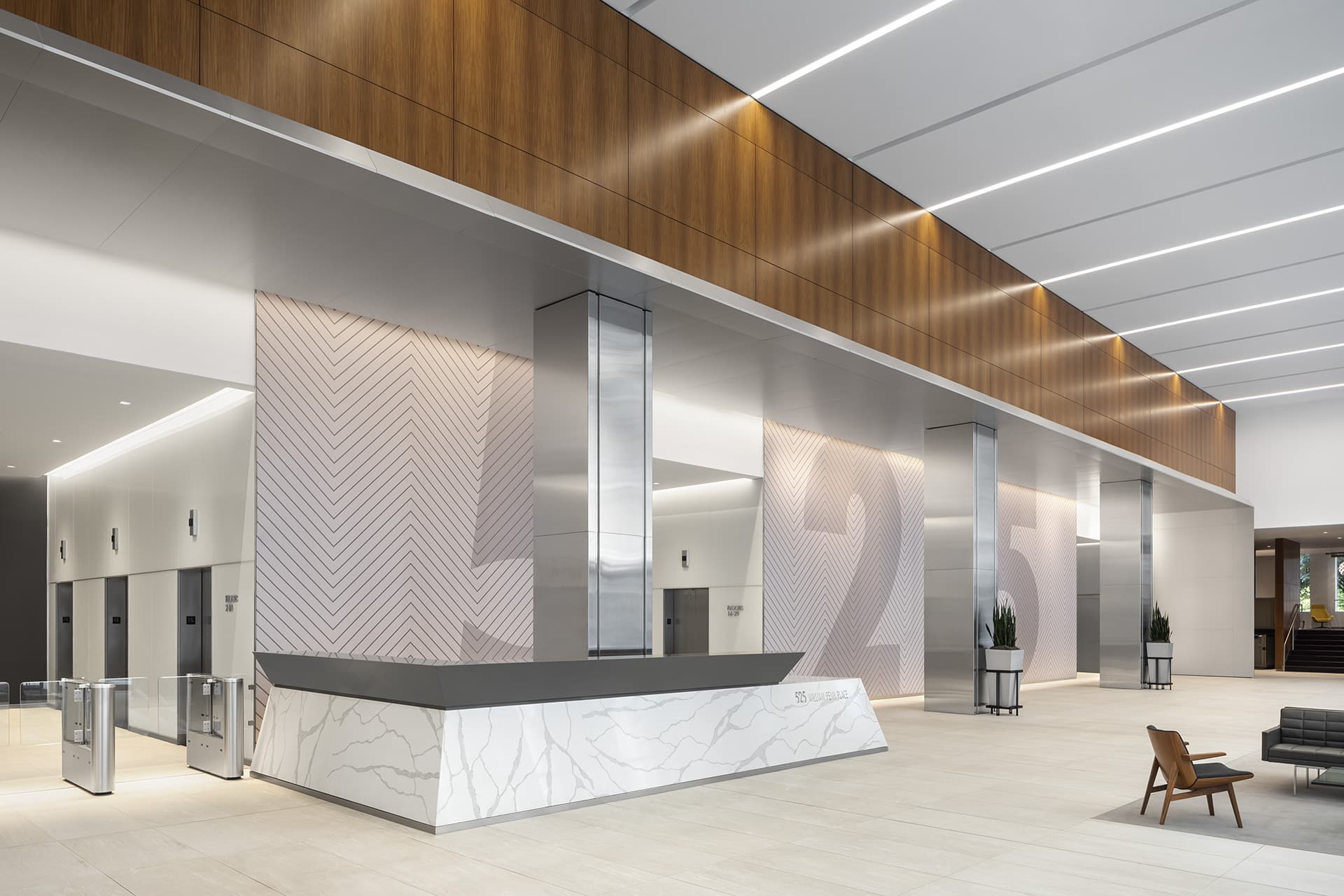
Walk into the lobby of 525 William Penn Place today and you might feel a weird sense of "what now?" hanging in the air. It is a massive, shimmering 41-story stack of steel and history right in the middle of downtown Pittsburgh. For decades, locals knew it as the Mellon Bank Center or the Citizens Bank Tower. Now, it's mostly just 525. It’s a building that has seen the rise, fall, and weird middle-age of the American corporate office.
History is everywhere here.
Completed in 1951, this wasn't just another office building. It was part of Renaissance I, the city's massive post-WWII effort to stop being the "Smoky City" and start being a modern metropolis. John W. Galbreath, who actually owned the Pittsburgh Pirates at the time, built it. He used a mountain of cash from Mellon National Bank and insurance companies to get it off the ground.
Back then, U.S. Steel was the big dog. They leased floors 9 through 37. Mellon Bank took the bottom. Then U.S. Steel built their own massive triangular tower on Grant Street in 1970 and left 525 behind. That started a cycle of identity crises that hasn't really stopped since.
What Really Happened to the Tenants?
Honestly, the building’s tenant history is a bit of a soap opera. When U.S. Steel left, Mellon moved in deeper and renamed it the Mellon Bank Center. Then they built another building (One Mellon Center) and renamed this one Three Mellon Center. Confused? You aren't the only one.
The biggest shift in recent memory happened when Citizens Bank bought Mellon’s retail division in 2001. Suddenly, the green logos went up, and it became the Citizens Bank Tower. But in late 2024, Citizens finished their big move to Four Gateway Center. They took about 500 employees with them, leaving a gaping 250,000-square-foot hole in the building’s occupancy.
And then there's BNY (formerly BNY Mellon).
In June 2024, BNY went through a massive rebrand, dropping "Mellon" from its primary logo. While they still have a massive presence in the city, the vibe at 525 William Penn Place shifted. They’ve been trimming their footprint globally, and while they still own a massive stake in the building's identity, the "Mellon" name is literally being scrubbed from the letterheads.
Currently, the building has over 500,000 square feet of available space. That’s a lot of empty desks.
The Weird, Secret Features of 525 William Penn Place
There are things about this building that you just don't see in modern glass boxes.
First, there is the "Secret Tunnel." It isn't actually a secret to the people who work there, but to everyone else, it’s a legend. There is a private underground passage that connects 525 William Penn Place to One BNY Mellon Center on Grant Street, running right under the Union Trust Building. It allows employees to move between the towers without ever touching a Pittsburgh snowflake.
Then there's the vehicle turntable.
Because the building was built in an era of tight city blocks and awkward delivery trucks, the basement has a working turntable. A truck pulls in, unloads its cargo, and instead of trying to back out onto a busy street, the floor literally spins the truck 180 degrees so it can drive out head-first.
Modern Upgrades or Just Lipstick?
The owners haven't just let it rot. Between 2016 and 2019, the building got a massive facelift.
- A new two-story glass facade at the street level to make the lobby feel less like a dark vault.
- An "executive" fitness center because apparently normal treadmills aren't enough for the C-suite.
- A tenant lounge that looks more like a boutique hotel than a place to eat a sad desk salad.
But the real struggle is the "Class A" competition. With new buildings popping up and remote work killing the demand for 40-floor behemoths, 525 is fighting to prove it's still relevant. It has LEED Gold certification and an Energy Star rating, which helps, but companies today want flexible, "cool" spaces, not just massive floor plates.
The Architecture Nobody Talks About
Harrison & Abramovitz were the architects. They were the same guys who did the Alcoa Building right across the street. While the Alcoa Building is famous for its aluminum skin, 525 William Penn Place was more traditional—heavy on the steel and limestone.
The 41st floor still holds a piece of history: a massive wall mural depicting Pittsburgh’s Point as it looked in 1849. It’s located in the anteroom of the former Mellon Executive Board room. It serves as a reminder that before this was a skyscraper, it was the site of the Henry Hotel, and before that, just a muddy point where two rivers met.
Why it Matters in 2026
If you’re looking at the Pittsburgh skyline, 525 William Penn Place is a barometer for the city’s economic health. When it's full, the city is humming. When it's half-empty, people start worrying about the "death of downtown."
The reality is somewhere in the middle. The building is currently being marketed as the "largest contiguous block of vacant space in Western PA." That’s a fancy way of saying "we have a lot of room." But for a massive tech company or a firm looking to consolidate, it's one of the only places in the city where you can actually take over 10 or 20 floors in a single shot.
Actionable Insights for Navigating 525 William Penn Place
If you're a business owner or just a curious local, here is the ground truth about the building right now.
- For Office Seekers: The leverage is entirely with the tenant. With BNY and Citizens reducing their footprints, the management (JLL) is offering aggressive deals. If you need 20,000+ square feet with a "prestige" address, this is the buyer's market of the decade.
- For Commuters: The building is right next to the "T" (light rail) and the new Bus Rapid Transit line to Oakland. It is arguably the most transit-accessible building in the city.
- For History Buffs: You can't just wander into the 41st-floor boardroom, but the lobby is public. The 2019 renovation kept some of the mid-century modern "bones" while opening up the Fifth Avenue entrance. It’s worth a walkthrough just to see the scale.
- The Valet Situation: Since parking downtown is a nightmare, the building now uses a valet service that stages vehicles beneath the building and whisks them away to a neighboring garage. It's the only way to handle the traffic on William Penn Place.
The building isn't going anywhere. It’s too big to fail and too well-located to stay empty forever. Whether it remains a banking hub or morphs into something entirely different—like the mixed-use residential conversions happening in the nearby Oliver Building—is the next big question for Pittsburgh's skyline.
Check the local zoning filings for the "Downtown Revitalization Plan" to see if 525 ends up on the list for residential conversion subsidies. Given the current office vacancy rates, that is the most likely long-term play for the upper 20 floors. If you are looking to lease, ensure your contract includes "non-disturbance" clauses in case of a building-wide ownership or use-case shift.